
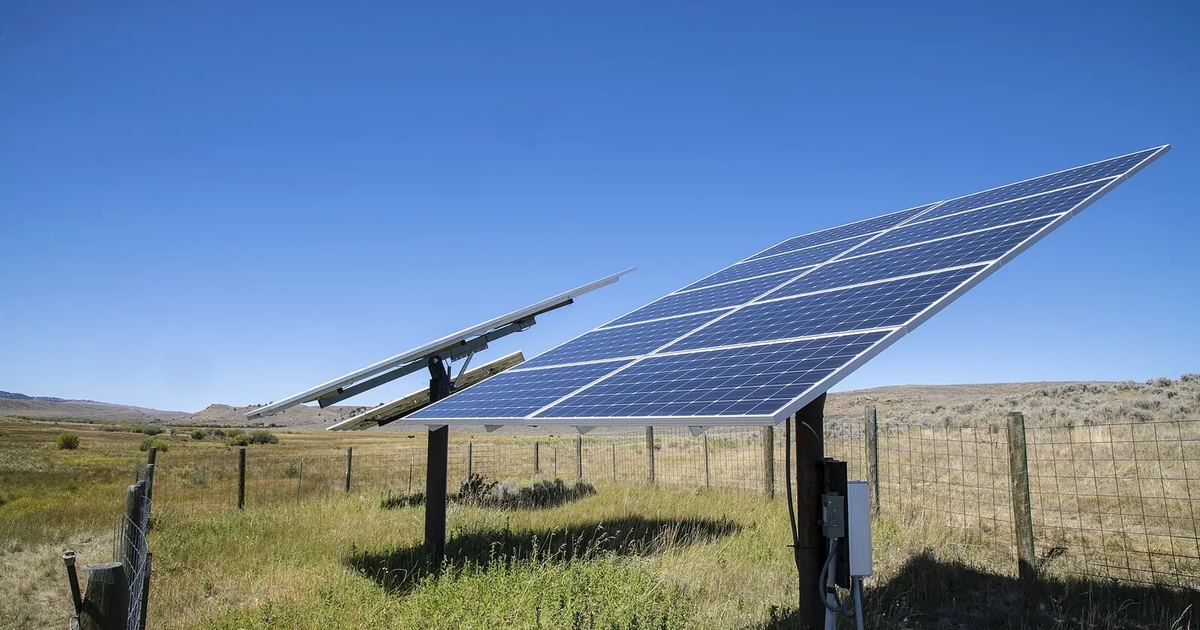
In much of Egypt the sun is available most days of the year, while fuel prices rise and the grid rarely reaches newly reclaimed land. That has made solar pumping a serious option for farms, but it does not suit every case equally.
How does the system work?
- Solar panels turn sunlight into direct current (DC)
- A pump drive (solar pump inverter) runs the pump and adjusts its speed to the sunlight available
- A submersible or surface pump delivers straight into the irrigation network or into a tank
Most agricultural systems have no batteries: the tank or reservoir is the "battery". Water is stored during the day and used when needed.
When does it pay off?
- When irrigation runs in daylight, or a tank can cover use after sunset
- When the grid is far away or unreliable
- When diesel is a large share of monthly running costs
- When the project is long-term, since most of the cost is paid once, up front
Solar alone does not suit loads that need long night-time running without storage. That is where a hybrid with the grid or a generator is studied.
What do we need to size it?
- Daily water demand in the hottest month of the year
- Total head (dynamic water level, delivery height and required pressure)
- Well data: diameter and the safe yield from the pumping test
- A suitable, shade-free area for the panels
Maintenance
Maintenance is simple: clean the panels regularly, check the connections and controller, and watch pump performance. In desert areas dust directly cuts output, so a cleaning schedule is part of running the system.