
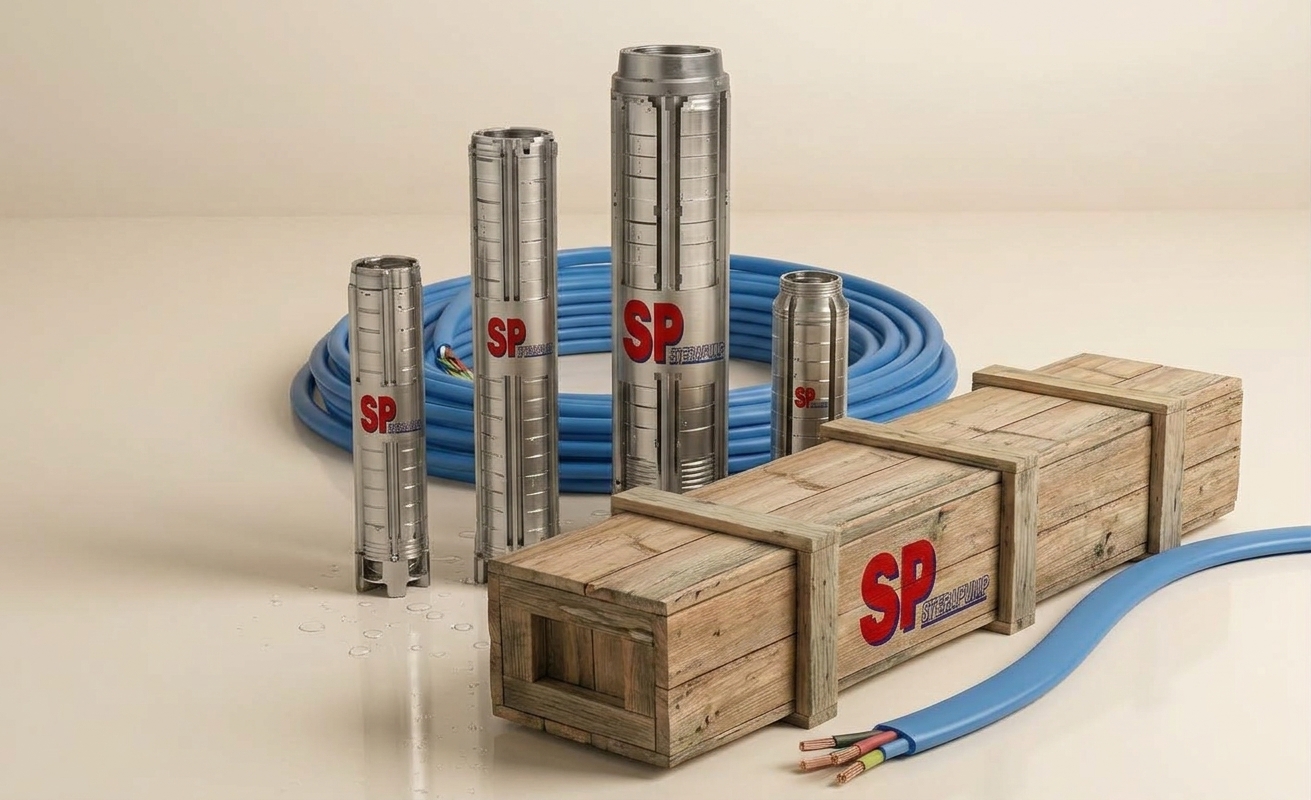
Let's talk about the Sterapump SP 30 6-inch submersible pump with a 3-inch outlet without any packaged talk: what really makes the difference, and what you should leave to the engineer on site.
Solar Pumping System: Components and Operation
On the ground, we see the following:
- Components: Solar panels plus a solar pumping inverter (converts DC to AC and controls pump speed with MPPT) plus the pump, mounting structures, cables and protections, a dry-run sensor, and a tank float switch.
- Batteries are usually not needed: The tank is the "battery"; we pump during the day and store water in a tank or basin to use anytime.
- Operation starts automatically at sunrise and stops at sunset, with speed varying according to radiation intensity.
- It can be made hybrid: The inverter accepts input from grid electricity or a generator for night hours or cloudy days.
- The service life of the panels is long (usually 25 years or more with factory performance warranty), and the inverter is serviced or replaced much less frequently than generators.
Types of Pumps and When to Use Each
- Submersible pump: Operates inside the well, most suitable for artesian wells and deep depths; common diameters are 4, 6, 8, and 10 inches.
- Surface centrifugal pump: To lift water from a tank, canal, or surface source (actual suction is limited to about 6-7 meters).
- Booster pumps: To increase pressure in an irrigation network or building.
- DC pumps: For small capacities directly on solar power.
- Solar-powered pumps are usually standard AC submersible pumps driven by a solar pumping inverter.
Comparison: Solar Energy vs. Diesel and Grid Electricity
- Diesel: Rising daily fuel costs, maintenance, oil and spare part changes, breakdowns, and transporting fuel to remote sites.
- Grid electricity: Unavailable in many new lands, connection costs can be high, along with monthly bills.
- Solar energy: Initial investment followed by near-free operation, simple maintenance (panel cleaning and periodic checks), and long life.
- In many irrigation projects, the client recovers the solar system cost within a few years from fuel savings (varies by operating hours and diesel price).
- A hybrid solution (solar + electricity or generator) is suitable for those who need night pumping or operation in all conditions.
- We provide the client with a digital comparison for their site after knowing their needs.
What Is the Difference Between a 4-Inch and a 6-Inch Pump?
This number is the pump diameter, determining the minimum casing diameter it can fit into: 4-inch for small and medium discharges, and 6-inch and larger for high discharges. The choice is determined by the required discharge and well diameter.
Can I Convert My Current Pump to Solar Power?
Usually yes, a standard submersible pump can run on solar power by adding a solar pumping inverter and panels of the appropriate capacity. We just need the pump capacity and well depth to check its condition.
What Are the Available Well Casing Diameters?
UPVC from 4 up to 16 inches, and iron up to 24 inches. The diameter is determined by the required pump: a 6-inch pump, for example, usually needs an 8-inch casing.
Request a Consultation and Price Quote
Send us your land location, project purpose, and any available data through the quote request form or WhatsApp, and a specialized engineer will contact you with a preliminary study and detailed price quote.